https://www.aexception.com/sony-xperia-1-vi-a-deep-dive-into-productivity-entertainment/
In the Android world, phones are roughly divided into two categories:
one is the “mainstream” flagship, which pushes the configurations that everyone is vying for to the extreme;
the other is the “unconventional” existence like the Sony Xperia.
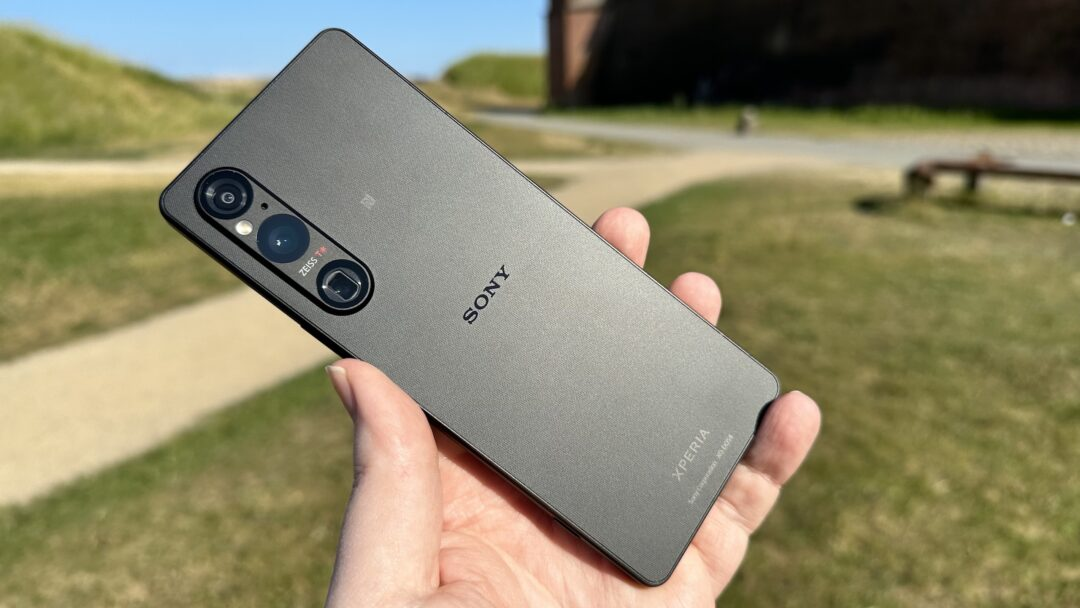
While others were busy developing punch-hole displays, pushing fast charging, and using AI to eliminate unwanted pedestrians, Sony persisted with seemingly outdated practices—a completely punch-hole-free screen, a 3.5mm headphone jack, a microSD card slot, and a physical shutter button. These are already rare sights in 2025. For Xperia users, it’s almost not just a phone, but:
A Bravia monitor that can fit in your pocket
A miniature camera with Alpha lineage
A portable creative tool (in some ways it’s like a “palm in your hand”)
However, rationally speaking, nostalgia doesn’t automatically equate to “worth buying.” If you broaden your perspective to the wider market of popular smartphones and tablets , you’ll see that the Samsung Galaxy S series and Xiaomi Ultra all boast a host of impressive specifications, including “stronger, faster, and smarter.”
So the question is: Is the Xperia 1 VI a niche product for a self-indulgent audience, or an all-around amazing device underestimated by most? Let’s take a more down-to-earth look at the comparison
from the perspectives of productivity and entertainment experience .
I. Screen Experience: Immersive Experience of Ultrawide Screens vs. Versatility of Mainstream Flagship Screens
This is the most undeniable feature of Xperia – its screen ratio, which you can recognize even from five meters away.
Sony Xperia: The cinematic feel of its 21:9 aspect ratio is something other brands can’t imitate.
Sony has stuck with the 21:9 aspect ratio for years. Although this generation of Xperia 1 VI has replaced 4K with FHD+ in exchange for improved battery life, the overall “ultra-wide” look remains.
The highlights of entertainment scenarios:
There are no black bars at the top and bottom when watching movies; the entire screen is completely filled.
The cinematic aspect ratio is a perfect fit, allowing for a completely immersive experience of Hollywood blockbusters.
No bangs, no cutouts, and it doesn’t ruin the picture at all (this is so important for movie buffs).
Bravia Engine’s color calibration makes it feel like a pocket-sized home theater.
Grip experience:
Although it’s 6.5 inches, its elongated shape makes it surprisingly comfortable to hold with one hand.
Mainstream Android flagship phones: Wider, brighter, and more “modern”
The Galaxy S24 Ultra is a prime example, with a common aspect ratio of 19.5:9.
Advantages:
A wider screen is better suited for browsing web pages, WeChat documents, and short videos.
Larger UI space, more universal compatibility
Mainstream users will find it “more pleasing to the eye and easier to use”.
Simply put: Sony is a “paradise for movie buffs,” and its mainstream flagship phones are “generalists of all content.”
II. Productivity: Xperia’s Split-Screen Capability vs. Samsung’s Desktop-Level Experience
Although Sony doesn’t make tablets, it clearly hopes that the Xperia 1 series can replace some tablets in productivity scenarios.
Sony Xperia: Naturally suited for split-screen
The 21:9 aspect ratio means that when you split the screen vertically, both apps can get a display area that is “good enough and has enough content”.
Typical operation:
Watching YouTube videos above (16:9 aspect ratio, just the right amount of space)
When accessing Slack, WeChat, or researching information,
you won’t experience the “forced split-screen with both top and bottom screens feeling cramped” experience, which is a natural advantage of Xperia.
Killer Feature: External Monitor Mode.
This is a favorite feature in the film and television industry:
with just a USB-C cable, the Xperia instantly transforms into a professional 4K external monitor for the Alpha camera .
No other Android flagship can achieve this integration of creator tools and external monitor .
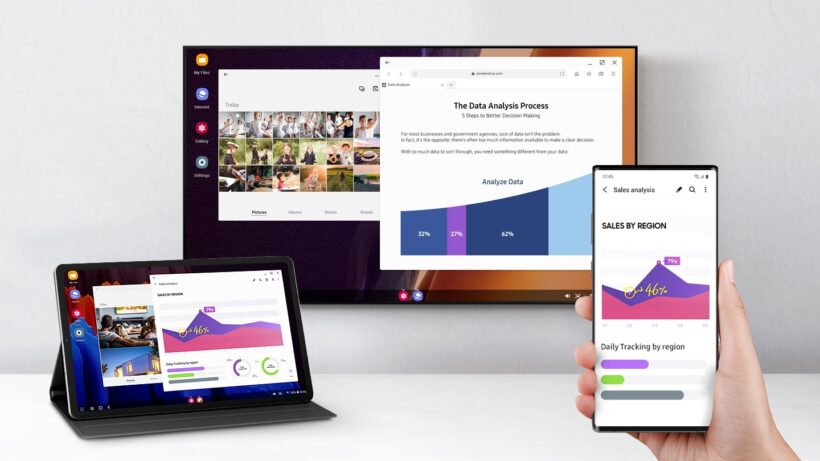
Mainstream Android flagships: Samsung’s Dex ecosystem is indeed mature.
Samsung’s Dex mode is something Xperia can’t replace.
Connecting to a monitor allows it to run in “desktop mode,” and with a keyboard and mouse, the office experience is very close to that of a lightweight computer.
so:
Multitasking → Xperia wins
Desktop Office → Samsung Dex Wins
III. Audio-visual Entertainment: When “Retro Interface” Becomes an Advantage
The entertainment section is almost entirely Sony’s domain, a true “paradise for audio-visual enthusiasts”.
3.5mm headphone jack
There’s no fancy explanation:
plugging in is convenient, has low latency, stable sound quality, and Hi-Res Audio.
While other flagship phones require you to buy adapters or use Bluetooth, Sony still gives you a physical world where you can “listen to whatever you want.”
Micro-SD card slot
Shoot a bunch of 4K/slow motion videos and RAW photos and running out of storage space?
Just change your memory card. Xperia supports expansion cards up to 1TB.
Mainstream flagship phones, on the other hand, either force you to buy a higher storage version or pay extra for cloud storage.
Front-facing symmetrical dual speakers
The sound comes out directly from the front, without being blocked by your hand. This
makes playing games and watching movies more immersive.
Xperia is practically a standalone entity in the mobile entertainment sector.
IV. Photography Philosophy: Computational Photography vs. Mirrorless Camera Mindset
Mainstream Android flagship phones: AI algorithms provide an incredibly smooth user experience.
Samsung and Pixel’s logic is:
You press the shutter
I’ll handle everything for you.
Night scene, contrast, sharpness, skin tone—all calculated perfectly by AI.
Suitable for all ordinary consumers.
Sony Xperia: Giving you the “power to shoot”
Xperia’s “Photography Pro / Videography Pro” app is extremely similar to the Alpha camera UI.
You can control it manually:
ISO
Shutter speed
White Balance
Focusing method
With the addition of a physical two-stage shutter button, the operating feel is just like shooting with a mirrorless camera.
This is a typical example of “giving freedom to professional users instead of convenience to ordinary users”.
In conclusion: It’s not that it’s not mainstream, but rather that it “forms its own system.”
If you choose a mainstream Android flagship, what you get is:
A modern smartphone that “doesn’t make mistakes”
Suitable for everyone, lowest learning cost
If you choose Sony Xperia, you will get:
A creative tool so unique that it is almost impossible to find a substitute.
Hybrid terminal integrating video, audio, and photography
The only device on this planet that can give you “full screen + wired headphones + Micro-SD + physical shutter”
Therefore, the Xperia 1 VI is not positioned as a “niche self-indulgent” device, but rather
as the only device that can meet all your needs if you are an audiophile, creator, or photographer.
https://www.aexception.com/sony-xperia-1-vi-a-deep-dive-into-productivity-entertainment/