https://www.aexception.com/ultimate-sony-camera-guide-2025-evolution-ai-autofocus-models/
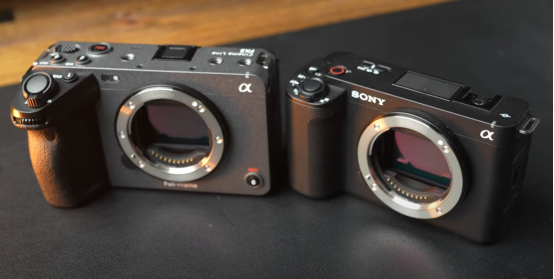
Sony’s ZV-E1 and FX3 are two very attractive full-frame cameras for video creators, but they are positioned differently and are suitable for different user groups. Which one is more suitable for you? We conduct an in-depth comparison from four key dimensions: image quality, control, functions and price.
1. Image quality and sensor
Both the ZV-E1 and FX3 use the same 12-megapixel full-frame back-illuminated sensor, support 4K 60p (uncropped) and 4K 120p (1.1x crop), and have excellent low-light performance (ISO 80-102400, expandable to ISO 40-409600).
Key differences:
FX3 provides 16-bit RAW HDMI output, suitable for professional film and television production, while ZV-E1 only supports 8-bit 4:2:0 internal recording (but can output 10-bit 4:2:2 via HDMI).
FX3 has dual native ISO (800/12800), and better noise control in low-light environments.
Conclusion: If you pursue the highest image quality and post-color grading space, FX3 is better; but if you are just creating YouTube and social media, the image quality of ZV-E1 is enough.
2. Control and body design
FX3 adopts a modular design with an active cooling fan, which is suitable for long-term shooting (such as documentaries, live broadcasts), and has an XLR audio interface (via MI hot shoe adapter).
ZV-E1 is lighter (483g vs 715g), suitable for handheld shooting and travel creation, but without a fan, long-term 4K shooting may cause overheating problems.
FX3 has more physical buttons and custom functions, suitable for professional users to quickly adjust parameters; ZV-E1 optimizes vlog operations, such as one-click blur/clear background and product display mode.
Conclusion: FX3 is suitable for serious video workers, while ZV-E1 is more suitable for creators who work alone, especially Vlog and social media content creators.
3. Focus and AI functions
Both are equipped with Sony’s latest AI focus system, which supports human eye/animal/vehicle tracking, but ZV-E1 goes a step further:
Automatic composition (AI tracks the subject and adjusts the picture crop)
Stable framing (digital image stabilization optimization, reducing head shaking)
Cinematic Vlog settings (one-click simulation of movie tones and widescreen ratio)
FX3 focuses more on reliability and manual control, suitable for professional shooting that requires precise focus adjustment.
Conclusion: ZV-E1’s intelligent functions are more suitable for fast filming, while FX3 relies more on manual settings, suitable for professional projects that require precise control.
4. Price and target users
ZV-E1 (about $2200): suitable for vloggers and content creators with limited budgets who pursue lightweight + smart functions.
FX3 (about $3900): suitable for professional video teams, independent producers, and users who need RAW output, long-term recording and high-end audio support.
Final recommendation
Choose ZV-E1 if:
You mainly make short videos such as YouTube and TikTok
Need a lightweight body + smart shooting function
Limited budget, but want full-frame image quality
Choose FX3 if:
You need the highest image quality (16-bit RAW)
Shoot long-term projects (documentaries, interviews, weddings)
Rely on professional audio equipment (XLR microphone)
In short: ZV-E1 is a “smart vlog artifact” and FX3 is a “small movie camera”. Your creative needs determine which one is more suitable!
Interactive question: Which one do you prefer? Welcome to share your reasons for choice in the comment area!
https://www.aexception.com/ultimate-sony-camera-guide-2025-evolution-ai-autofocus-models/