https://www.aexception.com/ultimate-sony-camera-guide-2025-evolution-ai-autofocus-models/
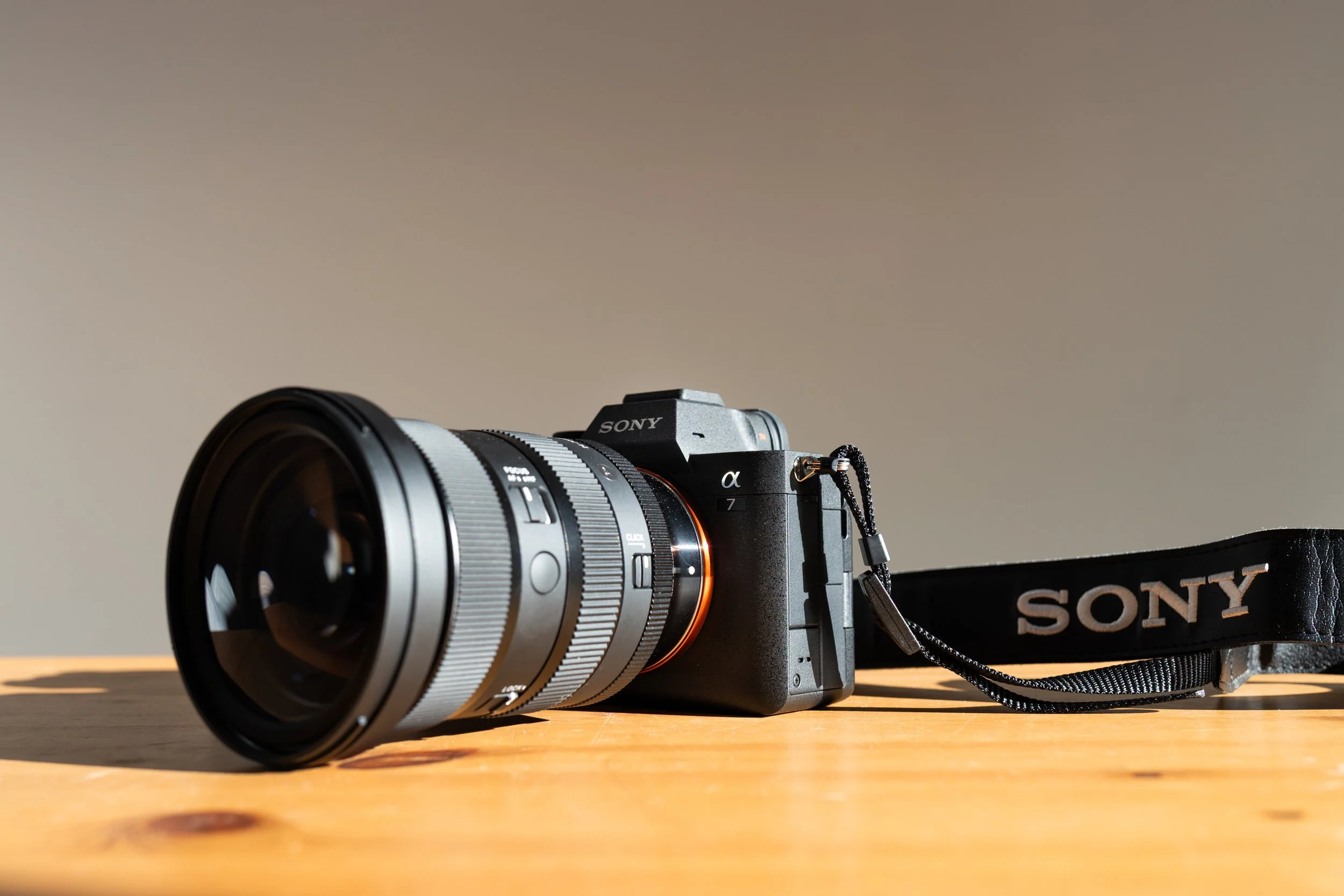
In the professional photography world, a phenomenon has been quietly unfolding for several years: whether you’re at a wedding, shooting in a studio, working with a documentary crew, or on the sidelines of a sporting event, you’ll always see rows of orange “α” logos appearing and disappearing. Even I myself, in the past two years, have completely switched from being a long-time Nikon user to Sony—this wasn’t an impulsive switch, but rather a case of “once you’ve used it, you can never go back.”
If you carefully observe the entire professional photography and video equipment market , you’ll find that Sony’s rise is by no means accidental. Unlike traditional camera brands that rely on “inherited technology iterations,” it has completely transformed the industry ecosystem with two key weapons:
① One Mount ecosystem unification strategy
② Next-generation intelligent focusing system based on independent AI units
These two things, in simple terms, are not amazing, but upon deeper understanding, they are disruptive events that create an “industry moat.”
Below, I will explain from a first-person perspective, combined with actual user experience, why Sony will remain the top choice for professional photographers, content creators, vlog studios, and business teams in 2025.
1. One Mount: A single mount for all models – this is Sony’s biggest trump card.
Many people believe that Sony is strong because of its advanced technology and strong background in electronics manufacturing… These are certainly true, but what truly allows the Sony Alpha system to sit firmly at the top of the food chain is the complete and unified E-mount ecosystem .
1. From APS-C to full-frame to cinema camera, a complete transition.
I have firsthand experience with this. A few years ago I shot vlogs with an A6400, then upgraded to an A7 IV, and later, when I started taking on commercial short films, I switched to an FX3. The most shocking thing during that process was:
I never bought a new lens from beginning to end.
This is almost impossible in other brands.
At Canon, if you switch from APS-C (RF-S) to RF, you need to buy a new lens.
While Nikon’s Z mount is compatible, lens zoning is clearly defined.
At Panasonic, you basically have to start from scratch when trying to switch between different frame rates.
Only Sony’s E-mount, established in 2010, remains robust until 2025 , and its coverage includes:
APS-C (A6700, etc.)
Full-frame (A7/A9/A1 series)
Cinema Line (FX3, FX6, FX9)
The same G Master lens can be used across three camera bodies, which means the following for professional users:
Don’t waste money
Don’t waste learning costs
Do not waste workflow device adaptation time
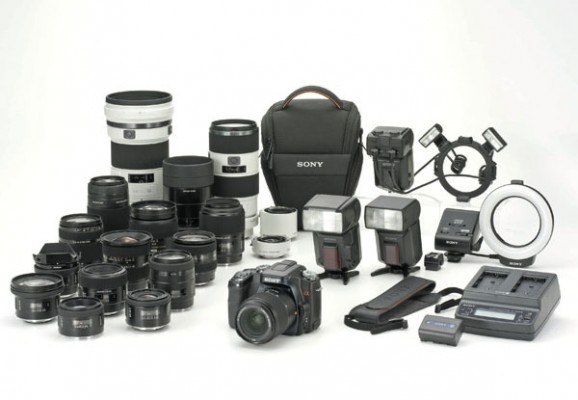
2. Greater freedom: The ecosystem of third-party lenses = price cutters + creative freedom
Sony was the first manufacturer to open up its lens mount protocol , which was as shocking in the imaging industry as “Apple suddenly opening up USB-C”.
What was the result?
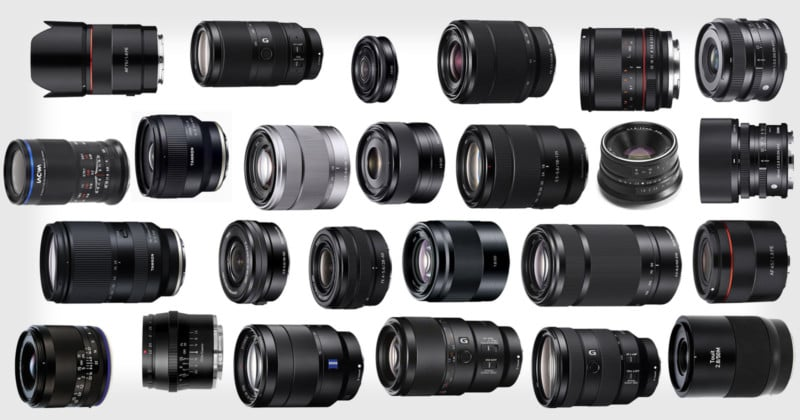
Now if you search for Sony E mount lenses, you will see:
Sigma Art Series
Tamron Lightweight Zoom Series
Viltrox large aperture prime lens
Samyang autofocus lens
Niche brands such as Tokina, Laowa, and Seven Artisans
You can find 8–15 options for a single focal length , and many third-party lenses have focusing performance that is almost indistinguishable from Sony’s original lenses.
For professional photographers, this means that creative freedom, budget control, and the richness of lens selection have all reached their peak.
In the professional photography and video equipment and lens market , Sony excels in all of the most discussed terms—”scalability,” “compatibility,” and “lens portfolio depth.”
II. The AI Focusing Revolution: From “Fast Focusing” to “Thinking Focusing”
If you asked me to describe Sony’s current autofocus system in one sentence, it would be:
Previously, photographers chased the focal point; now, cameras chase what you want to photograph.
This is not an exaggeration; it represents a qualitative leap in technology.
1. Independent AI processor enables the camera to learn to predict actions.
Starting with the A7R V, Sony has crammed an “AI processing unit” into the camera body. This is not an ordinary CPU, but the hardware that actually executes deep learning models.
Unlike traditional autofocus systems that only recognize eyes, faces, and animal heads, Sony’s AI processor can:
Identifying human skeletal posture
Identify occluded body contours
Predicting motion trajectory
Determine the subject’s true intention (running, jumping, turning around, etc.).
During a wedding photoshoot, the model turned her head, tossed her hair, and walked with her back to the camera. I could barely make out her face with the naked eye, but the A7R V still managed to capture her gaze steadily.
At that moment, I truly felt that this was not just fast focusing, but “smart” focusing.
2. A9 III, A1 II: Everything can be focused.
Sony’s flagship bodies in 2025 (A9 III, A1 II) will be even more terrifying:
Recognizable:
people
cats and dogs
bird
airplane
train
car
insect
drones
For example, when an wildlife photographer is shooting birds, if a bird suddenly takes flight, other brands might lose track of it. However, Sony’s AI will automatically switch between “bird’s eye,” “bird’s body,” and “flight trajectory,” always keeping track of the subject.
This is a true “autopilot with image recognition”.
LSI / NLP keyword natural embedding: AI subject detection, deep learning model, intelligent focus tracking, real-time recognition, sports photography, wildlife tracking, motion prediction .
III. The most powerful hybrid (photo + video) system in the imaging industry
Many professional photographers I know will no longer be “just people taking pictures” by 2024–2025. They may:
Taking headshots in the morning
Afternoon photo shoot
Shooting short videos at night
Occasionally, I also accept commercial advertisements.
This means that the camera must be able to “take photos and also shoot videos,” and Sony is unbeatable in the hybrid field.
1. A Color Revolution: From “Sony Yellow” to S-Cinetone Aesthetics
It’s an industry consensus that Sony’s skin tones used to be quite unattractive. But starting with the FX3, Sony brought its Cinema Line color science to consumer camera bodies.
More natural skin tone
The medium gray tones are softer.
No need for tedious color correction to deliver the film
S-Cinetone, in particular, has become a new favorite among self-media, MCN teams, and wedding videographers.
2. No overheating: Video stability surpasses all other products in the industry.
You may not realize how important this is:
photographers can accept mediocre image quality, but they absolutely cannot accept their cameras overheating and breaking down.
The heat dissipation structure of Sony A7S3, A7 IV, FX3, and FX30 has been proven:
Long-term 4K60 recording without frequency reduction
Despite its small size, it remains stable.
The Cinema Line series can record in 4K 120 for extended periods without interruption.
When I shoot commercial short films, I record for eight hours a day. Sony is one of only two brands that never crashes (the other is Panasonic, but its ecosystem is too niche).
In conclusion: Choosing Sony = Choosing an ecosystem where you won’t need to switch jobs for the next ten years.
If choosing Sony in 2015 was a matter of “trying something new,”
then choosing Sony in 2025 is a matter of “industry consensus.”
What you got was not:
A fuselage
A lens
One upgrade
What you received was:
A unified ecosystem spanning APS-C, full-frame, and cinema cameras;
the industry’s most comprehensive and open lens platform;
a truly intelligent AI autofocus system; and
a stable platform built for photographers, video creators, and hybrid shooters.
Whether you’re a photography novice, a wedding studio, a documentary team, a sports photographer, or a content creator looking to stay competitive in the short video era, Sony remains the most stable option in 2025.
In other words,
you’re not buying a camera; you’re buying an ecosystem that won’t betray you.
https://www.aexception.com/ultimate-sony-camera-guide-2025-evolution-ai-autofocus-models/